PDF Download Traditions in Architecture: Africa, America, Asia, and Oceania
Thanks for visiting the most finished and also upgraded web site that bring hundreds of publication checklists. This is just what you can consider obtaining the book as the referral for you in doing the presentation to really feel better. The book that ends up being referral to read now is Traditions In Architecture: Africa, America, Asia, And Oceania This is among guides that we detail as one part of the terrific countless books from worldwide. So, when you locate as well as browse the book titles right here, it will be from lots of nations on the planet. So, it's so completed, right?
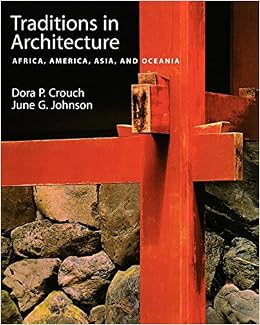
Traditions in Architecture: Africa, America, Asia, and Oceania

PDF Download Traditions in Architecture: Africa, America, Asia, and Oceania
Don't you assume that you need brand-new method to lead your room time much better? Keep ahead with great practice. Checking out is just one of the best recommendations for you. However, selecting the very best analysis publication is also crucial. It will affect exactly how you will get the breakthroughs. It will show you the quality of guide that you review. If you require the kind of book with high quality, you can pick Traditions In Architecture: Africa, America, Asia, And Oceania Why should be this book? Come on follow us to know why as well as how to get it.
Any publications that you check out, regardless of exactly how you got the sentences that have actually read from guides, surely they will provide you goodness. However, we will certainly show you one of referral of guide that you have to review. This Traditions In Architecture: Africa, America, Asia, And Oceania is just what we definitely indicate. We will reveal you the practical reasons why you should read this publication. This book is a type of precious publication composed by an experienced author.
When you have chosen to review it, you have actually chosen to take one step to address the obstacle. It can be done by then reading it. Reviewing Traditions In Architecture: Africa, America, Asia, And Oceania can be a guy selection to fulfil your spare times in everyday activity. It will be better for setting the soft file of this book in your gizmo so you could enjoy reviewing it at any time and also any kind of were.
To obtain exactly what you actually wish to make, reading this publication can be accomplished each time you have opportunity to check out. Yeah, reading is a has to from everybody, not just when you are remaining in the college. Reviewing will certainly make you wiser and also better in knowledge and lessons. Lots of experiences can be likewise gotten from reading only. So, be smart to obtain all those gain from Traditions In Architecture: Africa, America, Asia, And Oceania to check out and also end up.
Traditions in Architecture: Africa, America, Asia, and Oceania is the first wide-ranging, one-volume study to examine the architectural achievements of diverse cultures outside the Euroamerican tradition. In contrast with traditional chronological surveys of architectural history, this volume is arranged thematically to show the basic commonalties of all human communities. In order to provide a basic understanding of the cultural heritage defining these diverse groups, both vernacular and monumental works are discussed. The book is divided into five major sections, each of which addresses specific topics fundamental to all societies. The authors discuss these topics in terms of particular architectural solutions, comparing and contrasting geographically separated buildings and construction traditions. For example, the issue of architectural meaning is studied through symbolic gardens in China, verbal ornament in the Islamic world, and the wall paintings of Ndebele women of southeast Africa. Beginning with an investigation into the ways in which the continuity of traditional forms is maintained, the authors then explore practical issues such as housing and food structures, climate and ecology, building materials, and architectural forms and methods. Architectural goals and purposes, which determine what is built, vary from culture to culture and are given special attention. Planning and design-ways in which space is used in patterns of organization-range from urban plans to landscaped settings. The authors conclude with an examination of cultural values, investigating the way in which architecture interacts with social relations, traditional theories, decision-making, and the economics of building. The book is enhanced by over 200 photographs, maps, and charts, as well as a glossary and full bibliography. This unique study will enlighten students and open new avenues of research for scholars.
Your recently viewed items and featured recommendations
›
View or edit your browsing history
After viewing product detail pages, look here to find an easy way to navigate back to pages you are interested in.
Product details
Paperback: 433 pages
Publisher: Oxford University Press; 1st edition (2001)
Language: English
ISBN-10: 0195088913
ISBN-13: 978-0195088915
Product Dimensions:
10 x 0.9 x 8.4 inches
Shipping Weight: 2 pounds (View shipping rates and policies)
Average Customer Review:
4.7 out of 5 stars
3 customer reviews
Amazon Best Sellers Rank:
#258,736 in Books (See Top 100 in Books)
My familiarity with architectural studies stems from 3 years as a graduate student. Most architectural studies are "biased" to western history and organized in chronological order. Traditions in Architecture takes a fresh approach by focusing on a rich source of architectural precedence in the early America, Asia, Africa and the far east. The organization is thematic, rather than chronological covering such diverse topics as fixed versus mobile living spaces, vernacular materials, construction methods, sacred spaces, and so much more.The only reason that I did not give the work 5 stars is that many of the pictures (all black and white) lacked clarity. I do not know whether this was due to poor originals or poor reproduction; however, the details often are necessary to understand the full impact of the works.As UCLA professors, Crouch and Johnson give much credit to their students' work and input. This appears to be a work that has been a culmination of years of study with much independent input. I highly recommend it as a "first" to take this approach and to cover such a wide breadth of topics in one volume.
good. the topics are good, but less figure for the example and reference..
Although the book was written as a textbook for a course in non-western traditions in architectural history, it may be of considerable interest to anyone traveling to parts of Asia, Africa and Oceania. The authors' approach is largely descriptive, and the illustrations both plentiful and very good, so one may be a little impatient that the verbal descriptions rarely provide much information that is not apparent from the photos and drawings; but this is, after all, a textbook, and if you will grant that allowance, it is well-worth your time.     The architectural traditions covered are contemporary as well as ancient, grand as well as domestic and, throughout, the authors treat the sacred and symbolic traditions of the culture, insofar as they are known or may be inferred, as they bear on the built environment. The book is organized thematically, rather than chronologically or geographically. Among the themes: moveable, stationary and underground dwellings; the impact of colonialism on native structures; the transfer of traditional architectural knowledge; and spatial organization, from courtyards to the axial alignments of cities. The focus is on three categories of structures: professionally designed and built monuments, houses erected by traditional building tradesmen, and structures that ordinary people build for their own use. The overarching theme is that architecture expresses cultural values as well as technology, and it illustrates that theme with an exceptionally wide range of examples.     In the single area of the book where I have a fairly solid background, the Anasazi/Puebloan architecture of the Southwest, the scholarship is current and sound. Interesting and highly informative.
Traditions in Architecture: Africa, America, Asia, and Oceania PDF
Traditions in Architecture: Africa, America, Asia, and Oceania EPub
Traditions in Architecture: Africa, America, Asia, and Oceania Doc
Traditions in Architecture: Africa, America, Asia, and Oceania iBooks
Traditions in Architecture: Africa, America, Asia, and Oceania rtf
Traditions in Architecture: Africa, America, Asia, and Oceania Mobipocket
Traditions in Architecture: Africa, America, Asia, and Oceania Kindle